Best iPad app for kampstyring on match day
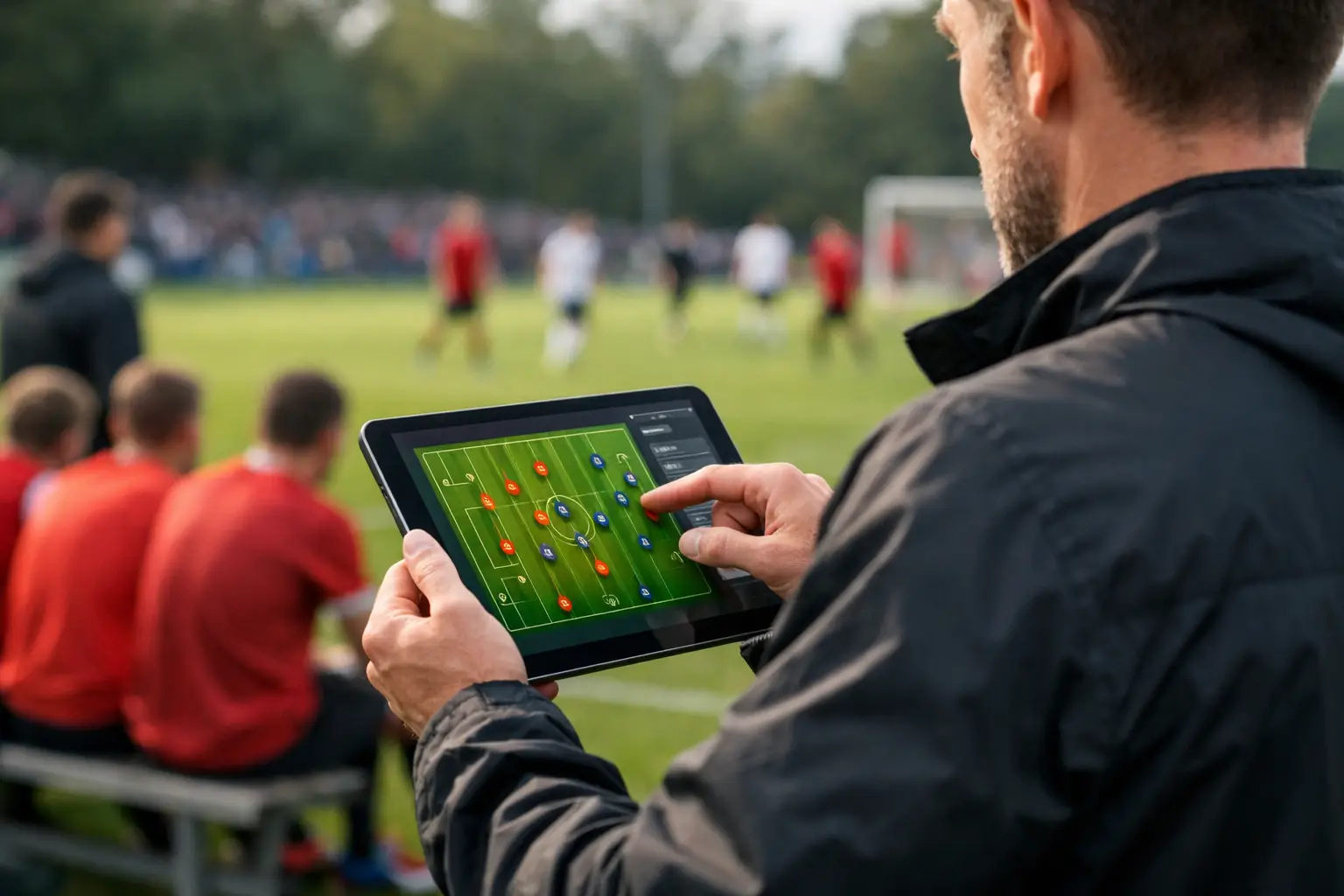
A match can turn messy in ten minutes. A goal, two substitutions, a yellow card, a quick formation change, and suddenly the coach is trying to remember who has played how long while also watching the next transition. That is exactly where an iPad app for kampstyring earns its place - not as a nice extra, but as a practical tool for staying in control when the sideline gets busy.
For football coaches and team staff, the real question is not whether digital tools are useful. It is whether the tool is fast enough to use during live play, simple enough to trust under pressure, and focused enough to solve the actual problem. A general notes app will not help much when you need to register a sub in seconds. A full club platform may be useful before and after the game, but often feels heavy during it. Match administration at the sideline needs its own workflow.
What an iPad app for kampstyring should actually solve
A lot of apps promise organisation. That sounds good until you are standing beside the pitch with cold hands, players asking for changes, and parents trying to catch your attention. In that moment, the app has one job: reduce friction.
An effective iPad app for kampstyring should let you log the key match events with almost no effort. Goals, cards, substitutions and playing time are the core actions. If those take too many taps, require too much reading, or hide behind menus, the app will end up ignored. Coaches do not stop the game to manage software.
The iPad format matters here. The larger screen gives you a better overview than a phone, especially when you need to see the whole squad, bench status and event history at once. That can make a real difference in 7-a-side, 9-a-side and 11-a-side matches where rotation and fairness need active tracking. On the other hand, an iPad only works well if the interface is built for quick touch input. A bigger screen alone does not fix poor design.
Speed matters more than feature count
Many coaching tools try to cover planning, messaging, attendance, tactics and analytics in one place. That can be useful across a season, but during a live match, feature count is rarely the deciding factor. Speed is.
If an app lets you register a substitution with one tap, that saves mental energy. If it automatically keeps track of minutes played, it removes a repetitive task. If the event log is always visible, it cuts down on second-guessing later. Those small gains add up across a match.
This is where coaches should be careful. Some apps look impressive in a demo because they have everything. In practice, a crowded interface often slows down the actions that matter most. Kampstyring is one of those areas where less is often better, provided the essentials are genuinely well done.
The best use case is live sideline control
The strongest case for using an iPad on match day is not broad administration. It is live control.
That means knowing who is on the pitch, who is due a rest, who has already come off, and what has happened in the game so far. It also means having enough confidence in your records to make decisions without relying on memory. If you coach youth football, that can help with balanced playing time and cleaner post-match communication. If you coach at a more competitive level, it helps you react faster and keep match events accurate.
There is a practical trade-off, though. If your staff setup is small and you are coaching alone, you do not want to stare at a screen all game. The app needs to support the match, not compete with it. That is why simple tap-based input and clear visual status are more valuable than advanced reporting during play.
What to look for in an iPad app for kampstyring
A good app should feel like it was built for football, not adapted from a generic team tool. That usually shows up in the basics.
First, event registration should be immediate. Goals, cards and substitutions need to be logged in seconds. Second, player tracking should stay visible, especially minutes played and current on-pitch status. Third, the app should support different match formats without forcing awkward workarounds. Coaches move between 5-a-side, 7-a-side, 9-a-side and 11-a-side, and the tool should adjust without fuss.
Reliability also matters more than people think. Match-day software must be predictable. Buttons should be where you expect them. The flow should feel stable from one game to the next. If a coach has to relearn the app every weekend, it is the wrong app.
An iPad-friendly layout is another detail that is easy to underestimate. On the sideline, you need large touch targets, readable player views and a structure that makes sense at a glance. A scaled-up phone app is not always enough.
Why paper notes stop working
Some coaches still use paper because it feels familiar. There is nothing wrong with that in principle, and for very simple fixtures it may be enough. But paper breaks down as soon as the tempo rises.
It is hard to track playing time accurately by hand while managing the team. Notes become messy. Substitutions get missed. Cards and scorers are remembered roughly rather than precisely. Then, after the final whistle, someone asks who played the last twenty minutes at full-back or whether a player reached equal game time, and the answer is uncertain.
That uncertainty is what a dedicated app removes. Instead of creating more admin, it cuts it down by turning match events into quick actions. The coach stays focused on football while the record builds itself as the game unfolds.
Not every coach needs the same setup
It depends on your level, your team size and how your staff operates.
A grassroots youth coach may care most about fair minutes, simple substitutions and clean records for parents or club staff. An assistant coach may want a better overview of cards, scorers and game flow while the head coach leads from the technical area. A semi-professional setup may value tighter event logging and a clearer post-match record.
The common thread is control. The details vary, but the need is the same: less sideline chaos, fewer forgotten moments and a more reliable picture of what actually happened.
That is why the right app is usually a focused one. If your biggest problem is managing the live match, choose a tool that is clearly built for live match management. Do not pay with time and attention for features you will never use on the touchline.
A football-first tool makes the difference
There is a big difference between using an app during football and using an app built for football. The first can work. The second usually works faster.
A football-first app understands the rhythm of substitutions, the pressure of in-game decisions and the need to record events without breaking concentration. It is designed around what coaches actually do in real time. That is why purpose-built tools tend to feel calmer in use. They remove steps rather than adding options.
MatchDay fits that approach well. It focuses on the actions coaches need during the game itself - registering goals, cards, substitutions and playing time quickly from the sideline on iPhone and iPad. That narrow focus is a strength, because match day is not the moment for bloated software.
Choosing the right app for your sideline
If you are comparing options, keep the test simple. Ask how quickly you can start a match, how many taps it takes to record the main events, and whether you can see enough at once to make decisions confidently. If the answer is unclear, the app will probably feel slow under pressure.
Also think about who is using it. A volunteer coach needs something instantly understandable. An experienced football staff member may tolerate a little more setup if it leads to better control. But in both cases, simplicity wins when the whistle goes.
The best iPad app for kampstyring is the one that disappears into the background while making the essentials easier. It should give you a cleaner match record, a clearer view of your team, and one less thing to carry in your head when the game speeds up.
On the sideline, that kind of simplicity is not a luxury. It is what lets you spend more attention on the match and less on managing the mess around it.